

Ambassador Spotlight “James Gager”

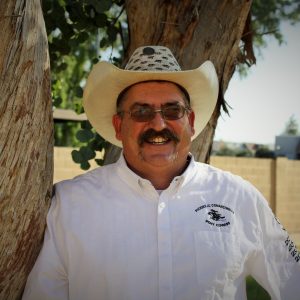
In today’s Ambassador Spotlight, we discover a little more about our latest Brand Ambassador James Gager from Sherburne, New York.

What do you do in the Geospatial Industry? I partner with regional Geospatial professionals (e.g surveyors) to understand the current workflow and match the workflow with the software and hardware they need. I sell all the necessary industry peripherals that our geospatial professionals need to get the job done. 

 How long have you been in the industry?  I have been in the industry for 14 years

Are you part of any associations or organizations you would like us to mention? Land Surveyors United

 Why do you want to be a GKiS Brand Ambassador? I believe getting in front of kids with the idea of being a geospatial professional give them the opportunity to see the world of Geospatial and how diverse its offerings are.

 Why is it important for kids to know about surveying and the wider geospatial industry? The introduction to the geospatial community at a young age will increase the number for interested people in the industry and securing a better tomorrow for the industry as a whole.

 What are you going to do as an ambassador for GKiS?  I will get in front of classrooms and create and introduction to the geospatial community.  Hands on applications and brief on the many opportunities in the geospatial community.

 What are your hobbies? Horse back riding, Hiking, adventure and finding new places for those adventures to occur.

 If you/your company had a GKiS character, what would it be? Professor Solutions, he would scour the planet looking at modern day workflows and finding, creating building software and hardware to meet the needs of all who seek to capture geospatial data set.

 What poster or resource would you like to see next from GKiS? CADD technicians at work to take field data and put into 2D, 3D and 4D applications to create asset management tools.


Eco Heroes…Assemble – Bringing Geography and Geo Survey to Life –

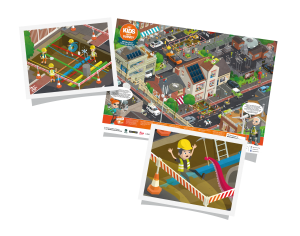
In a primary school in Manchester, a group of key worker children were set a lofty challenge… to save the planet! Using the Get Kids into Survey Forestry Exploration Poster as their starting point, they would explore the importance of ecological study and natural resource management, the global effects of deforestation, and the ways in which they could employ their geo-survey skills practically to do their part to make the Earth a little more green!

Introducing the Project

Pupils used the forestry-themed exploration poster to find out about all the hard work that goes into maintaining, managing, protecting,
using and replenishing forests around the world. However, they also learned that not every forest around the planet is managed with such care. This discovery prompted a fact- finding mission, where pupils used their research skills to discover the impact of global deforestation…

What Trees Need… and Why We Need Trees!

Pupils used similes to help them remember the functions of the different parts of a plant, e.g., “The roots hold the plant in place, like a ship’s anchor!”

Having garnered a more thorough understanding of the problems caused by deforestation, the group soon became determined to do something to help. Before they could get started, though, it was important for them to expand their knowledge when it came to all things green! So they began to create their own guides to plants, starting with the basic anatomy and functions of the various parts of a plant, then moving on to study the oxygen / carbon dioxide cycle as it exists between animals (including humans) and plant life.

The group also created interactive pull-tab diagrams to show the absorption and expulsion of gases between humans and plants.


The group added a ‘What Plants Need’ guide to their growing resource bank, detailing five key factors that affect the healthy growth of plants, and the potential consequences that might occur if any of these needs are not met.

“Time – a plant grows in stages. First the roots expand and take hold, then the stem shoots up. Then the leaves and the flower grows. This process cannot be rushed.”

– Year 5 Pupil

The group also managed to take what they’d learned into the virtual environment, creating animations using a computer coding programme to illustrate the growth process of a plant:

Who’s Helping?

With the pupils’ understanding of the severity of deforestation around the globe – and the importance of plants to support animal life – growing with each activity, they were relieved to hear that organisations have been established the world over to tackle this crisis. One such initiative, with which some of the pupils were already familiar, was #TEAMTREES. This planting project was set up by two YouTubers with the goal of planting twenty million trees to help in the fight against deforestation; a goal that they managed to reach with the help of mass public donations. Not only did the #TEAMTREES initiative succeed in reaching its target, it managed to surpass it, and its work continues today. In response to this, the group produced posters to be displayed in school, in an effort to further increase awareness of the project. They looked at interesting iconography around reducing, reusing, recycling and conserving, and put their own twist on them to create some highly impactful pieces…

Mapping Out Our Mission

With the group fully immersed in forestry, plant biology and deforestation awareness, the time came to turn study into action! This would be where the pupils’ survey skills came in handy – in particular their knowledge of mapping.

The group began a study of global coordinates; more specifically, they began looking at the decimal degree system for finding extremely precise locations anywhere in the world. This study began with a look at basic coordinates, which expanded into work on four-quadrant coordinate readings. With that under their belt, the pupils went on to look at how the decimal degree system built on the idea of segmenting an area of land into smaller and smaller grids, based on lines of longitude and latitude, to provide precise positioning data. This linked with and reinforced their previous work on map-making and use of satellite data in geo survey work.

Once the pupils understood the format and function of decimal degree coordinates, they were set a challenge – a virtual treasure hunt – with the goal of locating famed landmarks across the globe.

The pupils became so adept at this so quickly, that the following day they came back to school with their own examples of landmarks which they had pinpointed using the decimal degree system!

As a final challenge, the pupils were asked to locate the position of their own homes using the decimal degree system. Once they had completed this task, they were asked to pick a specific location in their garden – one that they knew, according to all the work they had done around what plants needed to grow well, would be a suitable place to add a little more green to the world…

Making the World a Greener Place

With their perfect plot picked out, the pupils noted down the decimal degree coordinates on a piece of paper and created a marker for their planting spot, which would allow them to keep track of the exact position of their plant. This would hopefully mark the first of many planting efforts, all of which would be logged with precise positioning data that could be used to track growth rates and the effect of factors like weather and care regimes.

Thanks to the Get Kids into Survey Forestry learning project, these pupils were able to increase their awareness of global conservation issues, and at the same time, use the skills they learned to do something practical, however small, to help redress the ecological imbalances they encountered on their learning journeys.


The Origins of the GEO SQUAD

One year ago, work began on a comic that would shine a light on the shrouded yet fascinating world of geo survey, the importance of surveyors, and their work around the world. The comic had some important questions to answer: what is a surveyor? What do they do? And most importantly, what would the world be like without them? This is where we start our story – a story that begins with an above-average gang, in an average school, on a below-average day…

While attending a totally tedious and dismally disheartening school careers exhibition, four friends discover a set of mysterious virtual reality headsets. The group put them on, and in an instant they are transported thirty years into the virtual future. There, they discover a city – their city – in utter ruin. All four are horrified, but they manage to convince themselves that what they are seeing is just a figment of someone’s disturbed imagination. That is, until a mysterious cloaked figure appears before them and tells them that this is no imaginary scene; it is real. It is their future…

Before Kwame, Setsuko, Miles and Maddison can respond, the hooded figure vanishes – tasking them to contact him again when they are sure no-one is listening in. Barricading themselves inside an empty classroom, they leap straight back into the virtual world. Only this time, the four find themselves in a vast, dark cave, littered with technology: strange electronic devices, huge computer banks, and a half-finished, oddly human-looking robot hanging from cables in the corner. But the gang are completely mesmerized by something else… A hologram stands in the centre of the cave. It’s the time traveller, welcoming them to ‘the home of the Last Surveyors…”

At this point, it’s safe to say that the gang have some questions… the first one being, what on Earth is a surveyor?

The hologram explains that surveyors were mappers, explorers and masters of technology, and their job was to keep both people and the environment safe – a job they’d been doing very well for over two-thousand years. That was, until powerful, greedy people began turning cities into chaotic, dangerous wrecks by building whatever they pleased, wherever they wanted, to make as much money as they could – silencing and eliminating any surveyors who got in their way… until there was only one left. That one became the Last Surveyor, and he used the technology of the surveyors to build four special machines, as well as a computer programme that could search through datatime, giving him access to digital time travel. Then, as his final human act, he uploaded his consciousness into a supercomputer so that he could live as a digital being, searching for a special team to help him save his world.

Revealing a collection of super-surveying robots, the Last Surveyor unveils his plan. His technology; their talents. Together they could save the future! The Last Surveyor doesn’t have to wait long for a reply to his challenge. Soon enough, four formidable robots are sent soaring towards Middletown at full speed. As the chaotic urban mess comes into view, a new figure appears. G.E.O G.I.N.G.E.R is the team’s onboard digital assistant, and she gets right to work, using LiDAR tech to scan the area. The results do not look promising. Collapsing buildings, perilous roads, craters in pavements and houses hanging by a thread from the side of tower blocks… the team have their work cut out for them already. Wherever should they start?

“You could start by saving your school,” G.E.O G.I.N.G.E.R suggests, “That hanging house is about to fall right on top of it…”

Will the GeoSquad make it in time to save the perilously positioned pupils in the school playground? Will the Last Surveyor’s marvellous mechs be up to the task? And will the gang manage to keep their future-saving activities secret from their schoolmates, teachers and parents!? Click the link below to read the adventure and find out for yourself!

Mathew Sullivan, FRSA Teacher, Author and Educational Consultant

GEO SQUAD Chapter 1- Direct Download

Get Kids into Survey Resources

Ambasador Spotlight “Jose Pedraza”

In today’s Ambassador Spotlight, we discover a little more about our latest Brand Ambassador Jose Pedraza from Houston, Texas.

What do you do and what company do you work for?

I am a land surveyor working as Survey Director at Stuart Consulting Group, Inc. We do a lot of work for the local cities, counties, and flood control district, mostly focused on civil engineering.

Are you part of any associations or organisations you would like us to mention?

I am very active in the Texas Society of Professional Surveyors (TSPS) – currently a local chapter director. I am also the east region coordinator for the Texas Young Surveyors (TYS).

Why do you want to be a GKiS Brand Ambassador?

I would like to be a GKiS Brand Ambassador to make a bigger impact on the growth of the geomatics/geospatial industry. I have previously coordinated a booth for the TSPS/TYS at a local student career fair here in Houston as well as participated in the technical advisory committee at a school district developing a geomatics program.

Why is it important for kids to know about surveying and the wider geospatial industry?

I think that exposing students to the opportunities in the geomatics field is important to help encourage growth. There are multiple opportunities for motivated and talented individuals to fill which are currently vacant due to the lack of talent. We have to encourage students into the field since not many educators know about the career opportunities available as geospatial professionals.

What are you going to be doing as an ambassador for GKiS?

I will strive to continue presenting at local careers fairs, schools, and other education avenues available locally. I will also encourage my peers to become more involved in spreading awareness of land surveying. My wife is a teacher, and I can work with her to find more opportunities to share our industry.

Texas Society of Professional Surveyors at the Houston Hispanic Forum 34th Annual Career & Education Day!

How did you get into surveying?

I got into surveying through luck. I enlisted in the Texas Army National Guard while in my first year of college studying civil engineering. My recruiter asked me what job or specialty I would like. I had no idea there were additional roles on top of just being a soldier, so I asked him to place me in the closest role to a civil engineer that he had. Next thing I knew, I was learning drafting, soils testing, and (most importantly) land surveying as a technical engineer specialist. I didn’t pursue surveying as a full-time career until a few years later after a couple of life-changing surveying missions with the Guard to Chile. (I actually wrote a post about it on LinkedIn a few months ago (see post here)).

What are your hobbies?

I enjoy learning. My hobbies include finding new ways to improve myself and sharing that knowledge with others. I also enjoy working out and binge watching TV shows with my wife.

If you/your company had a GKiS character, what would it be?

Our GKiS character would have to be an investigator (almost Sherlock Holmes but not quite…). Since a big part of our job is searching for the small details, I think that would be fairly accurate.

What poster or resource would you like to see next from GKiS?

It would be interesting to develop some sort of simple learning game that kids can play, highlighting surveying somehow… I remember playing Math Blaster as an elementary school student and that really got me into math. Not sure how much work that would take, but I think that would really get some interested!

Anything else you want to add that you think our audience would be interested in?

I’m just trying to make a positive impact in our community. I think there’s a huge lack of awareness of our industry and know it won’t get better with inaction. I also know there’s a big opportunity to grow our talent pool by looking to diversify our recruiting efforts.


New beginnings for Australia

COVID-19 brought a whole year of change none of us were expecting. There were some highs and there were lows as I am sure you have all experienced. With that, we are sad to tell you that our lovely Australian Distributor Michelle Brooks of CDM Branding will no longer be representing Get Kids into Survey for the Australasia region. Michelle has gone on to some new pastures and we wish her the best of luck in her new endeavors. And so when one door closes a new one opens. Enter Narelle Underwood and Michelle Blicavs of the NSW Surveying Taskforce.

These two brilliant women in surveying will represent and distribute resources for ‘Get Kids into Survey’ for Australasia. Narelle Underwood (photo left); Surveyor General of NSW and Chair of the NSW Surveying Taskforce. A NSW representative on the Taskforce National Alliance and a Superstar of STEM. Michelle Blicavs (photo right) is Narelle’s partner in crime when it comes to the NSW Surveying Taskforce. She is also the CEO of The Association of Consulting Surveyors.

We can’t wait to see where these women and the NSW Surveying Taskforce take ‘Get Kids into Survey’ for Australia and beyond.

The NSW Surveying Taskforce will be represented in our posters and material by Narelle and her son Lachie flying his drone. See if you can spot them in our upcoming Utilities Australia Poster coming this September.


If you want to join the Australian family of sponsors and ambassadors why not reach out today? 


Be a Sponsor email elaine@getkidsintosurvey.com

Be a Brand Ambassador email elly@getkidsintosurvey.com

For more information on the NSW Surveying Taskforce, see their website here

https://www.alifewithoutlimits.com.au/


A Cold Case…the Mysterious Murder of the Abominable Snowman. Bringing Geography and Geo Survey to Life –

In the final week of what has been an out-of-the-ordinary academic year, a group of key worker children set out to solve a fittingly out-of-the-ordinary mystery: the baffling demise of the abominable snowman. They were asked to take on the role of CSI – Crime Scene Investigators – to collect, collate and analyse a range of evidence, biological samples and eyewitness accounts, linking them together in order to discover the true culprit behind the tragic departure of the giant yeti…

Introducing the Project

The group started with the Get Kids into Survey CSI Exploration Poster and, with the help of the prompt questions, quickly identified the number one suspect.

They spotted the red footprints and the telling toilet roll – following both across the village green, over the bridge, up the tree to find…

All signs seemed to point towards this mince pie stealing, toilet roll touting, red-pawed menace. That was, until the class was read the transcript of a phone call to the emergency services that came just moments after the yeti met his end – a call that cast a sudden and murky shadow of doubt on the murderous squirrel theory…

Reviewing the Case

The frantic call included tales of some odd goings on occurring ‘down by the lake’. The caller reported that a huddle of suspicious characters seemed to planning something, even though, by her own admission, the members of the gang couldn’t actually talk. Luckily, she was able to provide some general visual descriptions, which the group used to search the scene for possible culprits. It wasn’t long before they found some unusual suspects…

A HOT TIP

Having identified the group of shifty-looking animals as ones-to-watch, the group received photographic evidence collected from the burnt-out house, not far from where the yeti was found. This brought to light some interesting new information, and made clear the importance of a CSI’s work, their methods, and how they help in solving crimes. The group linked their previous learning on LiDAR and measuring technology to the work of CSIs, noting that a lot of the survey techniques with which they were already familiar were being used at the crime scene. For example, there was a GPR scanner being used to ‘look’ for anything suspicious below ground, and there were LiDAR scanners collecting digital image data to facilitate the creation of a virtual crime scene. There was also some good old fashioned photography going on, and the pictures taken inside the house where the fire had occurred were of particular interest to the pupils…

Whilst the hairs might have been put down to the family dog – and the claw marks too (although they looked too wide and too deep to belong to Bingo the friendly beagle), the size of those footprints pointed towards one very distinct owner. However, it wasn’t enough for the pupils to assume that they belonged to the yeti; putting him at the scene of the house fire was a big step to take – pun intended! They had to know for sure that these footprints belonged to something abominable. It was time for a crime scene recreation!

First, the pupils took the dimensions from the footprint and created their own replicas:

Then, using the stride measurements taken by the CSI team (80 inches between each print), the group recreated the path taken by the owner of the footprints through the house:

Once the footprints had been laid at carefully measured intervals, the group took turns to try and cover one of the single steps with their own feet. Whilst some pupils almost ended up doing the splits, and a few members of staff also tried their best, no-one was able to match the stride length of the owner of the footprints. A second challenge saw the pupils taking leaping bounds along the footprint path to see how many of their steps it would take to cover the same distance that the footprint owner covered in eight. Even with their best, bounciest efforts, the lowest any pupil managed was thirteen steps. These endeavours confirmed the group’s suspicions: there was only one character in the scene tall enough to leave footprints like that… the yeti himself. And if those footprints were followed, the pupils noted that they led back to the burning house – putting the yeti at the scene of a possible arson attack!

Collect the Evidence

With the shocking revelation that the yeti must have been in the house where the fire was before the blaze got completely out of control, the group was compelled to examine the epicentre of the crime scene once more. They focused on the yellow numbered markers dotted around the yeti, and they learned that these are used in the collection and collation of evidence. They help CSIs and police to keep track of individual pieces of evidence, and in this scene, there were six key items. The group described each one in their notes, and began to think about what they could mean in light of the latest information from the CSI team. The Christmas cracker became a particular item of interest, especially after it was revealed to have contained an expensive gift…

Social Media Shocker

While re-examining the crime scene, the group noticed the two shady agents across the road, both of whom were looking very concerned. It seemed that they had been making their own inquiries, and had turned up some very interesting evidence from their analysis of the villagers’ social media pages…

The pupils recognised those shadowy silhouettes immediately: the animals from their suspect sheet! It was beginning to look like this village had its own squad of furry vigilantes, who tracked down criminals and brought them to justice. But if the ducks, the sheep, and that sneaky squirrel were the good guys, what did that make the yeti?

It was time for a final review of the evidence…

  • Large footprints, claw marks and hair put the yeti at the scene of the house fire before the blaze. One Christmas cracker containing a precious gift was reported missing from the house.
  • CSI found toilet paper at the scene, matching the brand used by the mysterious vigilante whocaught the bank robbers.
  • A series of extremely large footprints were found crossing the river bank, heading away fromthe house where the fire was and leading to where the yeti was found. This suggests that theyeti was running from the house when he met his demise.
  • A group of unsuspecting animals seem to have become a team of crime-fighting vigilantes,using baked goods as bait, and toilet roll as a weapon.Finally, the pupils were asked to prepare their conclusions:The yeti was trying to steal the Christmas cracker from the house. He was the criminal because he also started a fire. The animal suspects were actually the heroes of the day, luring him and capturing him. They set a trap with mince pie and toilet paper (the toilet paper was their weapon). I was really shocked but it makes perfect sense. The reason why the yeti ran and cut through the fence was because he could smell the mince pie, but he was also trying to escape the house before he was burnt like he’d been put in the oven. I can tell it was the yeti, because nothing else could have left footprints that big! The animal suspects were acting very sneaky so they could plan the things they needed to do to stop the yeti once and for all. I think that the yeti was an arsonist because he was in the house before the fire happened, so he must have caused it. This criminal has thankfully been stopped. The social media pages make the animal suspects the heroes.– Year 4 Pupil, aged 9The group thoroughly enjoyed the Get Kids into Survey CSI learning project; they were excited by its mix of intrigue and workable clues – they felt very smart to have cracked the case by the end! The project also enhanced both their knowledge and perception of survey techniques. The fact that these methods and technologies have applications beyond mapping, architecture and physical geography made the world of geo survey even more interesting!

Character Spotlight “QK4”

In today’s Character Spotlight, we discover a little more about one of GKiS’s newest sponsors “QK4” while interviewing Ben Shinabery, Land Survey Director of QK4

Ben Shinabery, Land Surveyor Director at Qk4

Company NameQk4, Inc.

Location – Kentucky, Indiana, Tennessee, & Georgia, USA

Why did you get involved in Get Kids into Survey? I grew up as the son of a surveyor and want to introduce other kids to all that surveying offers

What do you do? – I tell people that I am a “High Definition Digital Terrain Modeler” that creates virtual reality environments for engineers… a Land Surveyor…

How long have you been in the Survey Industry? – If I count walking with my dad through corn fields looking for section corners when I was a kid, over 30 years. I have already started teaching my son and daughter how to be a surveyor…

How did you get into the Industry? – Having a land survey father helps, but I also liked math and science in school. I also love being outdoors and enjoying different location surveys: mountains, farms, creeks, cities, and caves

Funny Fact about you – I collect and throw axes… I also love spending time looking at old maps of places that I have been or would like to visit some day

Favourite piece of kit and why? – I carry my drone with me wherever I go, just in case we need to map a jobsite

Favourite Survey technique and why? – 3D Laser Scanning is my favorite way to collect the highest resolution digital model of existing survey features whether above ground or underground… look up “Big Bat Cave LiDAR” for an underground cave scanning tour in Kentucky

Your website: www.qk4.com or find me @theQk4Surveyor

If you have a character; how did you choose and what does he/ she/ thing represent?  Mean to you? – One of the most important projects that we have ever run is the Bridging Kentucky Program… Our bridge surveys are helping sustain safe bridges for school busses, firetrucks, and emergency workers to cross Kentucky Bridges. The Qk4 Bridge Troll inspects and maintains bridges, and because he cares for the safety of all, he doesn’t charge any crossing toll.

Character Spotlight “Position Partners”

In today’s Character Spotlight, we discover a little more about one of GKiS’s awesome sponsors “Position Partners”.

Company Name – Position Partners

Location – Australia, New Zealand, Asia

Why did you get involved in Get Kids into Survey? – We thought it was a great idea, well executed by Elaine and team! Kids don’t learn what surveyors do but they work with really cool technology so it was a great idea to promote the profession

What do you do? – Marketing Manager for Position Partners – we supply and support intelligent positioning solutions for the geospatial, construction and mining industries

How long have you been in the Survey Industry? – Our founding companies were brought to life more than 30 years ago. I’ve worked with geo technology suppliers for 13 years

How did you get into the Industry? Though the good fortune of meeting and working with Martin Nix

Funny Fact about you – I have a unique ability to memorise numbers but am hopeless at maths (I could never cut it as a surveyor!)

Favourite piece of kit and why? RPAS because who wouldn’t want to fly a remote control plane at work?

Favourite Survey technique and why? I don’t think I can comment on that, see fun fact above

Your website: positionpartners.com.au

If you have a character; how did you choose and what does he/ she/ thing represent?  Mean to you? Plumb Bob the Koala because they are unique and worth protecting, like the survey profession!