
Ambassador Spotlight ‘John Hohol’

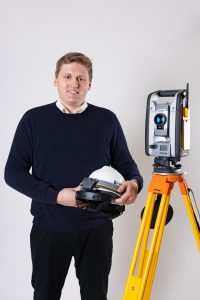
We are thrilled to welcome John Hohol to the GKiS family. A wonderful man who does a lot of valuable work for the industry.


If you are not a surveyor, what do you do? President of the FIG Foundation (2003-present).


How long have you been in the industry? Since 1979. I have been a member of the national surveying association in the U.S. since 1979 (originally the American Congress on Surveying and Mapping- ACSM which merged with the National Society of Professional Surveyors-NSPS in 2012),  I have also been involved in the International Federation of Surveyors (FIG) since 1981.


Are you part of any associations or organisations you would like us to mention? Honorary Member- International Federation of Surveyors (FIG), Life Fellow- National Society of Professional Surveyors (NSPS); Fellow- American Congress on Surveying and Mapping; Member- Wisconsin Society of Land Surveyors (WSLS)


Why do you want to be a GKiS Brand Ambassador? I am proud of my involvement in the creation and growth of young surveyor networks around the world and look forward to extending it to the youth of the world.


Why is it important for kids to know about surveying and the wider geospatial industry? Beyond being one of the oldest professions in the world the surveying and geospatial profession is also the foundation of everyday life.  Those professionals were there first so the police, fire and ambulance first responders could find you.  They determined boundaries, set roads, streets, subdivisions so we can live in our neighborhood, postal carriers deliver our mail and our governments provide important everyday services.


What are you going to do as an ambassador for GKiS? Continue to support and work with FIG, NSPS, young surveyors and other groups to open the eyes of young people to the amazing world of surveying.


What are your hobbies?  Reading, traveling, helping others.


If you/your company had a GKiS character, what would it be? A detective, Sherlock-style, searching for opportunities to involve young people in surveying.


What poster or resource would you like to see next from GKiS? Archaeological or space.


Ambassador Spotlight ‘David Iping’

Welcome to our latest Brand Ambassador David Iping from Australia:

Where did you study? Ultimo Tafe

What are the requirements to be a surveyor in your area? Diploma in Surveying or higher

How did you get into surveying? My mother got me into surveying as my grandfather was a concreter and use to always work closely with the surveyors on-site, so when it got time to finish school I was convinced to try surveying and started working as a chainee the day after my HSC.

How long have you been in the industry? 17 years


Are you part of any associations or organisations you would like us to mention? Institute of Surveyors

Why do you want to be a GKiS Brand Ambassador? As it will be a fun way to help get more people in the industry, as you see it all the time nobody knows what us surveyors do.

Why is it important for kids to know about surveying and the wider geospatial industry? That anyone can do it, you get to work on some amazing projects and have to chance to travel the world with the career.

What are you going to do as an ambassador for GKiS? Bring laughter and fun to it. Make the kids realise its cool to be a surveyor.

What are your hobbies? Drag racing, motor cross, working on performance cars and snowboarding.


If you/your company had a GKiS character, what would it be? Me with my big smile.

What poster or resource would you like to see next from GKiS? Mining or high rise construction.

Anything else you want to add that you think our audience (surveyors, teachers, parents) would be interested in? With the way the industry is moving forward with technology, you be able to play with some very cool equipment like drones and laser scanners, these tools have revolutionised the industry.


International Day of Education

International Day of Education is ‘in celebration of the role of education for peace and development. Without inclusive and equitable quality education and lifelong opportunities for all, countries will not succeed in achieving gender equality and breaking the cycle of poverty that is leaving millions of children, youth and adults behind”.

How are GKiS helping to educate the next generation?

1- Our resources are completely FREE which means that they are widely accessible no matter what your financial situation. Money should not prevent you from gaining access to fun resources. 

2- We are Global! By having multiple distributors who work closely with us, they enable us to send our resources out globally (just pay postage). See our distribution map below:

3- 2020 brought new lesson plans in response to the pandemic. Due to lots more children studying from home (just like us adults working from home!) some were in need of activities and support in their new homeschooling venture. Each of our posters came with a lesson plan which are downloadable here, all of which can be printed at home. Some even come with worksheets to make things ultra simple! Find out how Matt, an awesome teacher in Manchester, UK found the lesson plan experience in his blog here.

4- Our Brand Ambassadors run demonstrations and presentations (when covid isn’t causing havoc!). They spare their time to teach about our industry to hundreds of children around the world! If you are a teacher/parent and want to chat about how we can help then please contact us.

5- Deliver a wide variety of resources including a Comic Strip Series. Currently chapter 3 of our GeoSquad comic is being published in POB Magazine and CES Magazine, we sometimes appear in Primary Times and Nat Geo Kids too! Look out for our exciting new arrival of a comic book in 2021. Colouring in sheets is another simple resource, we all love to do some colouring in to relax sometimes… Keep an eye out for our new releases by signing up to our newsletter (see footer of our website).

Ambassador Spotlight ‘Assumpta Jebichii’

Let us introduce you to our latest Brand Ambassador; Assumpta Jebichii, a final year student pursuing Geospatial Information Science at Maseno University, Kenya. Assumpta is dedicated, detail oriented and an approachable expert of GIS, remote sensing and survey, who attributes success to outmost discipline and determination. She has excelled in areas such as Geospatial software management (ArcGIS and AutoCAD civil 3D), data collection and research.

She is passionate about making a change in her community and the world in general by using GIS as a tool in solving real world problems, hence providing long-term solutions. “I believe that GIS and Survey is a powerful tool and it should be embraced by all.”

Assumpta is a a member of Women in GIS, GIS chapter (Maseno University), PASAMU (Planning association of students of Maseno University) and a former GIS/Survey Intern of the Kenya National Highways Authority (KeNHA).


Do you attend Career Fairs?

 The annual RIC AfriGEO symposium at the Regional Centre for Mapping of resource for Development (RCMRD).

I got the opportunity to attend this conference that brought together decision makers, Geospatial engineers, surveyors and students across the globe. It was aimed at showcasing the importance of spatial data in finding solutions in sectors such as, governance, land administration, healthcare planning, utilities etc.

LAKE BASIN INNOVATION AND INVESTMENT WEEK(LBIIW)

Kid’s Hackathon

This conference was guided by the theme, “Promoting innovation for sustainable development”. One of the core activities that I got to volunteer on was the Kids hackathon session, whereby kids from the lake region were being empowered on how to make toys and the use of robotics and also on how they can use their talents to bring solutions.


What is the requirement to be a surveyor in Kenya?

Under the Constitution of Kenya for someone to be able to practice surveying fully as a career, he/she must be licensed and should be a full member of ISK (Institution of Surveyors of Kenya) or he/she should work under a licensed surveyor.

How did you get into surveying?

I love maps because they do speak in a unique way. Maps can convey information in a way that no human eye can see, through interpretation and visualization. My passion for space and environment saw me take Geospatial information science and surveying as a career, because it gives me an opportunity to map out phenomena that have spatial characteristics and also to discern spatial relationships that do exist between features and why these relations happened.

I have grown my career through immense support and guidance from my lecturers and my mentors who are in the same industry, who have constantly empowered and mentored me to be where I am today.

How long have you been in the industry?

I have been in the Geospatial and survey industry for 1 year and half.

What Associations and Organisations are you apart of?

  • Maseno University
  • Women in GIS
  • PASAMU(Planning association of students of Maseno University)
  • GIS chapter(Maseno University)

Why do you want to be a GKIS Ambassador?

Get Kids into survey is a platform that instils core career values to the younger generation by empowering and mentoring them. I would like to be an Ambassador of this organization so that I can be a change to the younger kids. I would like to encourage and produce Geospatial engineers and surveyors from this generation and also from the disadvantaged groups in the society.

Why is it important for Kids to know Surveying and the wider Geospatial industry?

Geospatial information science and Surveying is a human interactive discipline that puts into consideration the opinions and the need of the community through Participatory GIS (PGIS).

It is important for kids to know Surveying and GIS because it will shape them to be key players, decision makers and critical thinkers in solving problems that are felt in the contemporary world by providing long term solutions by the use of spatial data.

Through this, they will also get to have a greater understanding on planet earth and on the importance of conserving the natural environment by use of maps and spatial data as a platform of making critical decisions pertaining the same.

What are you going to do as an ambassador for Get Kids into Survey (GKIS)?

As a Get Kids into Survey ambassador, I plan to engage all primary school and secondary school children in my community. I would like to be a change by empowering and mentoring them on core career values especially on what Geospatial Information Science and survey entails.

I believe that out of this, many young children will feel empowered by guiding them on the importance of using their God given talents effectively and on how to make wise career choices when the right time comes.

What are your hobbies?

  • Travelling to new places
  • Reading a book
  • Cooking
  • Environmental conservation 

If you could choose a Get Kids into Survey character, what would it be?

The character would be a Bear representing a Geospatial analyst. The character will represent the day to day roles of a geospatial analyst, who uses GPS for spatial data collection and maps for representing features.

What posters and resources would you like to see next from Get Kids into Survey (GKIS)?

  • GeoSquad
  • Utilities poster
  • Forestry posters
  • Crime scene investigation posters

Anything else you would like to mention?

“The future of our nations and the next generation is our key responsibility. A nation that invests and takes care of its children and their welfare is set to prosper”.

Character Spotlight ‘RIPRO Corporation’

Company name:  RIPRO Corporation , Japan

Location: Okayama city, Japan. The head office is located about 600 km from Tokyo and about 150 km from Hiroshima.

Why did you participate in Get Kids into Survey?

We want to tell the world’s kids about the importance of survey markers. To help them understand why survey markers exist and how they help protect everyone. To encourage kids to explore and find survey markers… You can even come across them as you walk to school! 

What do you do?

Survey markers have been protecting our lives since the days of your grandfather and grandmother; as well as your great-grandfather and great-grandmother, going back hundreds of generations to ancient Egyptian times. Survey markers have long watched over the past history and future of time. They will spend their lives at their installation point and will stay there forever, watching over you. RIPRO manufactures survey markers that provide support for your life and to help land surveyors.

How long have you been in the survey industry?

RIPRO is nearly 50 years old, founded in 1973. Looking at the plastic trash that was thrown away 50 years ago, we started thinking that we could recycle waste plastic into something useful. That was when the idea came to light, before this survey markers were mostly wooden stakes, but we thought in the future people will eventually run out of natural resources! 

It was said that they should be changed to a recycled plastic stake marker that can be used for a long time, is light, easy to carry and stronger. Plus the discarded plastic was regenerated cleanly to re-invent the surveying stake. These days, we are working to develop a new survey marker for the future by evolving to an information ECO stake marker. An information survey marker with IT technology which will talk to you through smart phones in the near future.

How did you get into the industry?

The trigger was the emergence of environmental pollution problems in the 1970s in Japan. We came up with a survey stake marker with the consideration of the utilization of discarded plastic. In Japan surveyors were pleased that they were light and easy to carry and difficult to pull out. We entered the market by using earth-friendly recycling and introducing earth-friendly surveying!

Interesting fact about the you

There was a big earthquake in Japan in 2011. At that time, a big tsunami swallowed the city and a lot of other things, it was a very sad time for us. What the tsunami swallowed arrived as garbage on the American west coast 5000 miles away. An American whale-sighting captain found a small 1 foot long survey marker stake floating alongside his dock. There was a Japanese character on the stake marker, and we were impressed that it had crossed 5000 miles from Japan due to the tsunami. I was able to visit him and take the marker he found back home to Japan. 

The news about the Japanese plastic survey stake marker was seen by a Seattle TV station and they broadcast a story about it on TV. Our American friend saw it, recognized it as a RIPRO stake marker and contacted me. Why does the stake that keeps an eye on everyone’s feet for many years swim to America? !! We were surprised. We immediately went to America to pick up a stake marker. The American Orcas Island captain was very surprised we came and kindly said for me to return to Japan safely. The tsunami is a sad time in history. However, this swimming stake marker that crossed over pacific ocean connected the United States and Japan, creating friendship beyond the earthquake and tsunami sadness. One Survey stake marker connected people and brought peace. It is a really interesting small survey marker adventure story which has been made into a book. You can read the story HERE which is called ‘LITTLE ORCA’S 5000 MILE ODYSSEY’.

Favourite piece of kit and why?

Information stake marker. For the future, we are developing and manufacturing an information stakes marker that adds information to an ordinary stake marker. Many people can see the information about the land through the stake marker on their smartphones, passively and actively. From the stake marker it can tell you about the history of the land, the history of people’s lives, maybe even point out delicious nearby shops too.

Favourite Survey technique and why?

Recently, due to weather climate variability problems, especially in Japan, there have been landslides in the mountains due to heavy rainfall. The stake marker that conveys active information monitors the movement of the mountain, by inserting a sensor in the head of the stake marker and alerts people to protect them from a landslide disaster. The monitoring measurement technology is from high-tech information stake markers made from recycled plastic waste. These contribute to disaster prevention and sustainable life in the sustainable development goals (SDGs).

Website: www.ripro.co.jp

How did you choose your character and what does it represent?

The character represents a conversation between a survey stake marker and a person. I (Kengo Okada/CEO) was born in a stake marker factory. When I was a kid, I was surrounded by many stake markers in the warehouse and they entertained me in the night when I was lonely. 

So, the person’s name is Kui- Japanese language for Stake Marker. I am very happy that the stakes have information and will be useful for disaster prevention and environmental activities. The stake marker name is Orcas! That is the stake marker that swam across the Pacific Ocean. 

I hope that one day the stake marker and people can talk to each other all over the world!

The ‘LITTLE ORCA’S 5000 MILE ODYSSEY‘ book by RIPRO is available to read, click on the title name.

Surveying Everest to the practical applications of GIS involving Covid19.

As a Geospatial community we are very lucky in the way that Covid-19 hasn’t had a drastic impact on our workload, compared to other industries (such as hospitality and tourism). We have been checking out some recent blog posts and compiled a few of our favourites. A mixture of topics for you to dive into…


Mapping tools for COVID-19 response

Responding to the covid-19 pandemic by observing the data and understanding the trends. This is how ArcGIS plays its part in the response, firstly it can monitor the current inventory of personal protective equipment (PPE) and the capacity and status of facilities. With other uses including monitoring the surge in graphs, managing testing sites by looking at demographics, and using StoryMaps to quickly communicate the changing situation to others. Read the full article here


Linking to the previous article this demonstrates how the vaccination programme can be coordinated. It is getting launched in the UK very quickly, so ensuring the vulnerable people have access to the vaccine is vital, which requires a lot of planning. This article explains the possible uses of GIS with the tools within it, and their practical applications to the programme. Worth a read if you are interested, click here.


Combining light and sound to see underwater!

With the ocean covering about 70% of the earth’s surface, it’s shocking to know that only a small proportion of that has been subject to high resolution mapping. Mapping underwater however, is not easy. “The main barrier has to do with physics: Sound waves, for example, cannot pass from air into water or vice versa without losing most—more than 99.9 percent—of their energy through reflection against the other medium. A system that tries to see underwater using soundwaves traveling from air into water and back into air is subjected to this energy loss twice—resulting in a 99.9999 percent energy reduction”. Read more to discover how the Photoacoustic Airborne Sonar System works on this blog


Which school subjects are involved in mining?

This is a must see video especially if you have kids in school and want to know how different subjects link to different careers. Might spark some new interests… Watch now


Mount Everest’s Changing Height

Now, you may have already seen this on the news as this story has been very popular with the press! Measuring Mount Everest! It’s grown?? By nearly a meter, the new official elevation announced on December 8 by Nepal and China. The two teams coordinated the results of their 2019 and 2020 surveys of the famous mountain to agree on the new elevation— 8,848.86 meters or 29,031.69 feet (height above sea level). Read it in full here.


Ambassador Spotlight ‘Trent Keenan’

Meet our Brand Ambassador Trent Keenan from Nevada, USA.


Where did you study? I studied AutoCAD in Phoenix, AZ before becoming a land surveyor. 


What are the requirements to be a surveyor in your area? For the State of Nevada, we require a bachelor’s degree in Geomatics 


How did you get into surveying? My story is a little different than everyone else, I was in High School driving down the road and saw a couple of surveyors walk out to the intersection and thought, that is cool… A few days later and I am researching what it will take to become a land surveyor. And I am glad I did. 😊


How long have you been in the industry? This is my 25th year in the land surveying profession! 


Are you part of any associations or organizations you would like us to mention? I have been involved in our local and state chapters of the Nevada Association of Land Surveyors since 2007. I am the past president of the local chapter 2011, and past president of the state association 2015, I am the current Nevada director on the Western Federation of Professional Surveyors (WestFed) and lastly, I am the current editor for our State Association quarterly publication called The Nevada Traverse. 

https://www.nvlandsurveyors.org/

http://www.wfps.org/index.html

https://www.nvlandsurveyors.org/nevada_traverse.html


Why do you want to be a GKiS Brand Ambassador?  I am heavily involved in outreach for our local and state association as well as the chairman for outreach on the WestFed board, so its only fitting to use the GKiS brand to help promote the profession and attract the under generation! 


Why is it important for kids to know about surveying and the wider geospatial industry?  There is a few reasons, but the main one would be to help kids understand that there is a career that will allow  them to work in a lot of different fields all at the same time, using history, law, math and working indoors or outdoors all in the same day. The profession requires a lot of working knowledge in a lot of different subjects. 


What are you going to do as an ambassador for GKiS? Help promote the GKiS brand, educate and mentor as many kids as possible through school career fairs, class presentations. And most of all bring awareness to the profession! 


What are your hobbies? Photography, Running ½ Marathons, Biking, Hiking & Golf 😊


If you/your company had a GKiS character, what would it be? Already have one. Its myself and my two dogs! 

What poster or resource would you like to see next from GKiS? Well Las Vegas of course! 


Surveying through history

Surveying is one of the oldest professions in the world. It has occurred since humans built the first large structures. 

Below are some examples, in history, of surveying: 


  • The almost perfect square shape of the Great Pyramid of Giza, built c. 2700 BC, is evidence of the Egyptians’ use of surveying. 


  • Stonehenge (c.2500 BC), in the South of England, was set out by prehistoric surveyors using “geometry” – from the Ancient Greek meaning “earth” “measurement” 


  • Eratosthenes was – amongst other things – one of the most important land surveyors of all time! Even though he lived over 2000 years ago – way before the time of scanners, satellites and sonar – he managed to work out the circumference of the Earth, the tilt of the Earth’s axis, and the distance from the Earth to the Sun! 

He even made a map of the world with parallels and meridians, showing that he understood that the Earth was a sphere! And he worked all this out through measuring and comparing distances and angles on land. We think that makes Eratosthenes a Geo Survey Legend!


  • The Romans recognised land surveying as a profession. They established the basic measurements under which the Roman Empire was divided. 


  • In the medieval period, groups of residents walked around their village to remind themselves of the boundaries. The group included people of all ages, the younger ones were there to make sure the ‘communal memory’ lasted as long as possible.


  • In 1086, in England, William the Conqueror commissioned the Domesday Book. It recorded the names of all the land owners, the area and quality of land they owned and specific information of the area’s content and inhabitants. 


  • Mount Rushmore 1927: These giant sculptures were carved into the granite face of Mount Rushmore by Gutzon Borglum to commemorate four great American presidents. Three of them were also surveyors!

George Washington was made a county surveyor at the age of only 17 – just one year after going on his first survey expedition! He completed around 200 surveys and mapped about 60,000 acres of land.

Thomas Jefferson came from a surveying family. He used his knowledge to help him make deals to buy land that quadrupled the size of the growing United States in the 18th Century.

Abraham Lincoln managed to become a surveyor after only six weeks of study. He would later use this knowledge to help him buy and sell land and invest in local areas.

Although the fourth president on Mount Rushmore, Teddy Roosevelt, wasn’t a surveyor, he did do some mapping in the Amazon! 


  • North Atlantic Ocean 1985: An underwater archaeologist named Robert Ballard in his submarine (‘Alvin’), exploring the North Atlantic Ocean floor at a depth of over 12,000 feet… in which he discovered something incredible: the wreck of the Titanic! Ballard had previous experience mapping underwater regions using sonar technology, but this find would put him on the map as an intrepid underwater explorer! However, the really cool part of Ballard’s story was that his mission to locate the Titanic was actually a cover-up for a secret military operation to find and explore the USS Thresher and the USS Scorpion, two American nuclear subs that sank in the 1960s! This sneaky spy stuff makes Robert Ballard a super cool surveyor!


  • Mount Everest 1999: Bradford Washburn was an expert cartographer, or map-maker, and the images he captured of remote and dangerous places are still used by climbers today. He used to hang out the side of a plane while his wife piloted; she would make daring fly-overs of treacherous areas while he snapped pictures from angles that no-one else dared to try and reach. In 1999, Washburn updated the official height of the world’s tallest peak – Mount Everest – to 8850m. He used special survey equipment to help make sure this reading was as accurate as possible… and he was 70 years old at the time! That makes Bradford Washburn a certified survey legend.