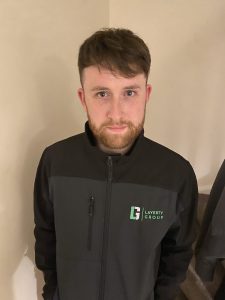
Where did you study? I studied in Ireland at Ulster University Jordanstown, Belfast. My degree was a BSc Construction Engineering and Management and I achieved a 2.1. I am always looking into new ways to learn and improve my knowledge base. As they say, every day you learn something new is a good day.
What are the requirements to be a surveyor in your area? I believe there aren’t any black and white requirements. You do need to have a basic understanding and enjoy working outside. You can do further learning to help improve your knowledge and to contribute to professional registration with a chartership.
How did you get into surveying? In all honesty, I wasn’t sure what I wanted to do even when I started my University degree. It was only when I started in the industry that I learned just how enjoyable it could be. You are constantly meeting new people and experiencing new locations so every day really is a different day.
How long have you been in the industry? I graduated University in 2018 but I have been involved in the construction/surveying industry since 2016. It is a fast paced industry and my first day on site in 2016 feels like it was yesterday!
Are you part of any associations or organisations you would like us to mention? I am currently working towards CICES and RICS membership.
Why do you want to be a GKiS Brand Ambassador? There aren’t enough people doing their best to promote surveying and the geospatial industry. When I seen GKiS I automatically knew I wanted to join as an ambassador and play my part in promoting the industry. When I was making the decision to choose a career path, I didn’t know much about the industry and I want to help change that to get younger people into surveying as early as possible. I also believe that we need to educate and attract more people to the industry to help with the on-going skills shortage.
Why is it important for kids to know about surveying and the wider geospatial industry? It’s important because we need to have future surveyors. I don’t believe that enough people are choosing surveying as a career path due to lack of knowledge and not being introduced to it. Surveyors and engineers will always be needed no matter how much the industry advances in terms of technology therefore it is vital that we are always attracting people to the industry.
What are you going to do as an ambassador for GKiS? I plan on doing whatever I can do try and promote the surveying and geospatial industry. I plan on starting a YouTube channel for my business and use that platform along with my Instagram and Facebook to socially promote the industry. When COVID is no longer an issue, I want to organise with local schools both in Ireland and the UK where we operate to introduce the younger generation to the industry.
What are your hobbies? I am really interested in drones for outdoor landscape photos and videos. I love playing golf and enjoy most other sports.
If you/your company had a GKiS character, what would it be? A Matrice 300 RTK drone with a LiDAR sensor
What poster or resource would you like to see next from GKiS? A poster showing the power and level of detail that can be captured using drones and other survey methods.
Anything else you want to add that you think our audience (surveyors, teachers, parents) would be interested in? I think its very important for us all to work together in raising awareness and helping to Get Kids Into Surveying by sharing our experiences and stories with each other through social media platforms, blogs and even YouTube!
Ambassador Spotlight ‘Letwin Pondo’
Say a big hello to Letwin Pondo, our latest Brand Ambassador from Zimbabwe, Africa!
Where did you study? Midlands State University, Gweru, Zimbabwe
What are the requirements to be a surveyor in your area? A level passes in Pure Mathematics, Physics and Chemistry
How did you get into surveying? I loved issues relating to land laws and policies, boundaries, land dermacation, cartography etc and Survey was the best way to go.
If you are not a surveyor, what do you do? Currently working to complete my studies at University (student).
How long have you been in the industry? 3 years
Are you part of any associations or organisations you would like us to mention? Yes:
African Surveyors Connect
Zimbabwe Institute of Geomatics
YouthMappers MSU Chapter
SEDS MSU Chapter
Why do you want to be a GKiS Brand Ambassador? To assist in nurturing the young minds, catch them young and watch them grow within the profession as they’re the future of any profession. I believe in kids, they’re intelligent, brave and adventurous and strongly stand with the notion that if they be educated earlier and left to grow….the future is very bright.
Why is it important for kids to know about surveying and the wider geospatial industry? So that they have a wider range of options to consider from when they’re choosing careers. They need to be educated of what it is, how it works and why they need to be there.
What are you going to do as an ambassador for GKiS? Educate the kids in various schools. Promote survey in every corner I can reach. Organize survey weekend camps for kids, quizzes, Workshops, debates, essay and speeches competitions, promote GKiS on social media and many more.
What are your hobbies?
Mapping
Researching
Playing with or nursing kids
Listening to music
Nature walks
Writing poems
If you/your company had a GKiS character, what would it be? Geospatial Kids
What poster or resource would you like to see next from GKiS? Ambassador handbooks, magazines, posters, t-shirts, stickers
Anything else you want to add that you think our audience (surveyors, teachers, parents) would be interested in? Adults please let the young ones explore! They’re still young and brave to venture more and bring new ideas on the table. Survey is not an outdated profession, it’s still there and still advancing amazingly and it is in the hands of these that the future of this profession lies. Let’s motivate and encourage them together after all it’s our world together….
What do you do?I’m an HDS Technical Support Engineering & Training Specialist
How long have you been in the industry?I’ve been in a support role since 2014, but I have been working in the industry since 2000.
Are you part of any associations or organisations you would like us to mention?I am a member CICES and a brand ambassador for Hexagon. I am also on the top 40 under 40 nominations for Geospatial Influential Individuals in 2018. I am now the main Technical specialist trainer for our Reality capture survey equipment within Leica Geosystems.
Why do you want to be a GKiS Brand Ambassador?When I was growing up, the industry was always thriving on man-power in a male dominated workplace. My teacher told me that girls shouldn’t take technical drawings, because they could not understand 3D. I really wanted to prove him wrong, and excelled at 3D drawings and modelling, way above my peers. I now work with 3D pointclouds and survey as good as any other surveyor in the industry for laser-scanning. I really want to give children the positive reinforcement that they can achieve greatness in any industry, but even more so in industries that previously were not considered ‘normal environments, based on gender’. I also would like to help kids gain a better understanding of all the different opportunities that are available to them in this Geospatial era.
Why is it important for kids to know about surveying and the wider geospatial industry?The future generation has to be shown how surveying is an integral part of our technological journey. They are the future of tech evolution and have to feel inspired to innovate.
What are you going to do as an ambassador for GKiS?Spread the word amongst children with STEM events and social media.
What are your hobbies?I love photography, painting and reading, but also enjoy gardening.
If you/your company had a GKiS character, what would it be?A cape wearing super-hero! We already have a green dragon on GKiS. 😊
What poster or resource would you like to see next from GKiS?I have noticed kids love games/apps on their devices. I know this is farfetched but an app based on the cartoon that you have in the GIS/ICES magazines – to give like a ‘story-line’ type scenario – would be great to get kids interacting and maybe something where you can use STEM activities to pass levels etc. A digital app resource would be good (unless one already exists for GKis and I just don’t know about it.)
Anything else you want to add that you think our audience (surveyors, teachers, parents) would be interested in?We should focus on skills shortages to fill those gaps. After a discussion with some children from my daughter’s school – they are all researching their future jobs by popularity but are not realising that the jobs that are popular are the ones people with study for and there will be too many people applying for the same job – rather than focussing on the opposite spectrum. Also – children in year 8 and 9 are the ones that are choosing their ‘career paths’ by subjects, therefor inspiring at that age, is critical.
Ambassador Spotlight ‘Patrick Hedegaard’
Welcome to Patrick Hedegaard from Jytland, Denmark! Here’s a bit about him:
“Im curently studying at VIA University College, a campus in Horsens, Denmark.
The requirements for becoming a land surveyor in Denmark are a high school diploma or another relevant 3 year education, and thereafter one can apply for the 2 year surveyor program with 10 weeks of fieldwork.
It was by chance that I started the education. When I started I quickly became aware that 95% of the students did not know what they had signed up for.or what a surveyor actually does. I want to help change that! “I have a dream” of making this wonderful education more understandable and attractive. So we can get the best of the best as our colleagues.
Being a surveyor is cool and the future is exciting. Feel free to follow my adventure on LinkedIn“
Where did you study? University of Puerto Rico at Mayaguez. Bachelor’s in science, Land Surveying and Topography Engineering.
What are the requirements to be a surveyor in your area?
ORIGINAL LICENSE (by examination) – For an original license in Maryland, the applicant has five categories that are divided into academic and non-academic options:
Approved Curriculum Option (15.305 b) – This first option requires the applicant to complete a four-year degree from an accredited land surveying curriculum along with two years of approved experience.
Approved Curriculum Option (15.305 c) – This second option requires the applicant to complete a four-year degree from an accredited physical science curriculum along with four years of approved experience.**
Approved Curriculum Option (15.305 d) – This third option requires the applicant to complete any accredited four-year degree with a minimum of 30 credits in land surveying-related curriculum along with four years of approved experience.**
Non-academic Option – (15.305 e) – This fourth option does not require a college degree. Applicants can satisfy the licensing requirement with a high school diploma and a minimum of 30 credits in land surveying-related curriculum along with six years of approved experience.**
Non-academic Option (15.305 f) – This fifth option does not require any college at all. Applicants can satisfy the licensing requirement with a high school diploma and nine years of approved experience.
** The board may allow one year of experience credit for each 30 semester hours or its equivalent that an applicant completes in land surveying-related courses that the board approves, with a three-year maximum.
Note: Steps 3 and 4 can be completed in any order. Applicants who have already passed the PS Examination do not have to retake the exam as long as the scores are available from NCEES or sent directly to the board.
License Period: Two-year period from the date of issuance.
How did you get into surveying? When I graduated from high school, I knew I liked math and I had no clue what to do. Someone suggested getting into the Land Surveying and Topography Engineering program and I just fell in love with the profession.
How long have you been in the industry? I have been Surveying for 14 years in Maryland and Washington DC.
Are you part of any associations or organizations you would like us to mention?
Why do you want to be a GKiS Brand Ambassador? I want to help spread the word about how amazing this profession is and, I want to help provide options to our future generation.
Why is it important for kids to know about surveying and the wider geospatial industry? It is important to understand what Surveying is and how important it is in our daily live. As professionals and mentors we must share, explain and train what and why we love this industry. Why is important. What can be achieved as a Surveyor. All the different levels and areas we can work as Surveyors. Again, to me is all about knowledge and opportunity.
What are you going to do as an ambassador for GKiS? Not very clear yet, I want to look for ideas and then execute. All I know is that I want to be part of it and I will work on a plan of action after I get some ideas.
What are your hobbies? Love traveling with the family, Sports and Working out.
If you/your company had a GKiS character, what would it be? Could you explain? I would like to see a Hispanic super smart, understanding, strict, funny, and kind Surveyor.
What poster or resource would you like to see next from GKiS? Puerto Rico. Puerto Rico has so many Natural Resources and a lot to show.
Anything else you want to add that you think our audience (surveyors, teachers, parents) would be interested in? Surveying as an opportunity for our children. Surveying is a real profession that needs to be seen as a real option.
Ambassador Spotlight ‘Rhian French’
Welcome to our Brand Ambassador Rhian French from Hampshire, UK! Let’s get to know her in this quick fire Q&A:
If you are not a surveyor, what do you do? I provide PR services for geospatial organisations – I help surveyors in National Mapping Agencies explain why what they do is important.
How long have you been in the industry? Since 2000
Are you part of any associations or organisations you would like us to mention?
Professional Ambassador and Fellow of the Royal Geographical Society with the Institute of British Geographers (FRGS).
Proactive Member of the Association for Geographic Information (AGI)
Enthusiastic supporter of Women in Geospatial
Why do you want to be a GKiS Brand Ambassador? I think it’s brilliant and a really engaging way ti inspire to next generation of geospatial professionals. I already attend careers fairs, schools and universities in the local area talking about my job and trying to inspire people to consider at as a career.
Why is it important for kids to know about surveying and the wider geospatial industry? It actual makes a difference to climate change, creating a fairer world, responding to and preventing disasters – all highly visual and easy to understand solutions to the challenges they will face as the next generation.
What are you going to do as an ambassador for GKiS? What ever you need me to but also happy to promote via my AGI membership and involvement in RGS
What are your hobbies? I love exploring new places, meeting new people (I’m very nosy!) I love maps and use them to explore outside, I really enjoy nature – from wildlife watching to gardening.
If you/your company had a GKiS character, what would it be? I have one – 3T the Polar Bear (thanks Elly!)
What poster or resource would you like to see next from GKiS? A little GIF for use in social media/presentations would be great.
Ambassador Spotlight ‘Thomas Herbert’
Introducing Thomas Herbert from Wisconsin, USA! Let’s get to know him in this quick fire Q&A:
If you are not a surveyor, what do you do? I am a paleontologist and run a nonprofit science foundation. Earth Sciences Foundation Inc
How long have you been in the industry? I have been digging dinosaurs for 10 plus year now.
Why do you want to be a GKiS Brand Ambassador? We integrate geospatial mapping and data curation into our programs for kids and veterans. We need more young people engaging in these fields.
Why is it important for kids to know about surveying and the wider geospatial industry? There are so many new applications and technologies coming out that we will need to engage the youth to keep advancing as well as keep them engaged into a career path. All building and infrastructure begins and ends with surveyors.
What are you going to do as an ambassador for GKiS? We will be including materials in our programs with kids to introduce them to surveying as well as when we do speaking engagements to create more brand awareness as well increase engagement.
What are your hobbies? I enjoy fishing and being outdoors. But I am fortunate that my favorite hobby is my job, digging dinosaurs.
If you/your company had a GKiS character, what would it be? A pachycephalosaurs.
What poster or resource would you like to see next from GKiS? Not sure, maybe an interactive online activity to engage kids in surveying. Almost video game like.
Anything else you want to add that you think our audience (surveyors, teachers, parents) would be interested in? As a foundation our focus is outreach and awareness. We strive to get more people, especially kids, involved in geospatial and geoscience careers.
Where did you study? East Tennessee State University. B.S. of Surveying and Mapping
What are the requirements to be a surveyor in your area?
62-18-109. Applications for registration:
(a)
(1) The board shall consider and evaluate a land surveyor applicant’s qualifications based upon:
(A) The applicant’s education, technical, and land surveying experience;
(B) Exhibits of land surveying projects with which the applicant has been associated;
(C) Recommendations and character references; and
(D) The payment by the applicant of a fee set by the board in accordance with § 62-18-125 with the approval of the commissioner of commerce and insurance.
(2) The board shall, in proper cases as authorized in this part, issue a certificate of registration as a land surveyor to any person who submits evidence satisfactory to the board that the person is fully qualified to practice land surveying.
(3) A land surveyor applicant’s qualifications may be reviewed at an interview if the board determines it necessary.
(4) Educational credit for institute courses, correspondence courses, or other courses shall be determined by the board.
(5) No person shall be eligible for registration who:
(A) Does not have a high school education diploma or a general equivalency diploma (GED®);
(B) Does not speak and write the English language; or
(C) Is not of good character and repute.
(b) The following shall be considered as the minimum evidence satisfactory to the board that the applicant meets the qualifications of a professional land surveyor:
(1) To be certified as a land surveyor intern (PLSIT), an applicant shall:
(A) Make a complete application to the board;
(B) Be of good character and reputation;
(C) Submit three (3) character references to the board, one (1) of whom is a professional land surveyor;
(D) Comply with the requirements of this part;
(E) Pass the Fundamentals of Land Surveying examination; and
(F) Satisfy one (1) of the following requirements related to education and experience:
(i) Obtain a baccalaureate degree from a surveying or surveying technology curriculum of four (4) or more years, approved by the board;
(ii) Obtain a baccalaureate degree from a science, engineering or technology curriculum of four (4) or more years related to the practice of land surveying, approved by the board, with a minimum of twenty-four (24) semester hours of board-approved coursework in the surveying sciences;
(iii) Obtain a baccalaureate degree from a nonsurveying related curriculum of four (4) or more years, approved by the board, plus an additional thirty-six (36) semester hours of board-approved coursework in the surveying sciences;
(iv) Obtain an associate degree in surveying technology or a related science, engineering or technical field, approved by the board, with a minimum of thirty (30) semester hours of board-approved coursework in the surveying sciences, a record of four (4) years of progressive practical experience, two (2) years of which shall have been under the direct supervision of a practicing professional land surveyor; or
(v) Obtain a high school education diploma or a general equivalency diploma (GED®) with a record satisfactory to the board of ten (10) years of progressive practical experience, six (6) years of which shall have been under the direct supervision of a practicing professional land surveyor;
(2) To be licensed as a professional land surveyor, an applicant shall:
(A) Make a complete application to the board;
(B) Be of good character and reputation;
(C) Submit five (5) character references to the board, three (3) of whom are professional land surveyors or individuals acceptable to the board and who have personal knowledge of the applicant’s land surveying experience;
(D) Comply with the requirements of this part; and
(E) Satisfy one (1) of the following requirements:
(i) Obtain a baccalaureate degree from a surveying or surveying technology curriculum of four (4) or more years, approved by the board, and a record satisfactory to the board of two (2) years of progressive practical experience after the applicant passes the Fundamentals of Land Surveying examination, one (1) year of which shall have been in responsible charge of duties performed under a practicing professional land surveyor. An applicant who passes the Principles and Practice of Land Surveying examination and the Tennessee State Jurisdictional examination shall be granted licensure as a professional land surveyor;
(ii) Obtain a baccalaureate degree from a science, engineering or technology curriculum of four (4) or more years related to the practice of land surveying, approved by the board, with a minimum of twenty-four (24) semester hours of board-approved coursework in the surveying sciences, and a record satisfactory to the board of two (2) years of progressive practical experience after the applicant passes the Fundamentals of Land Surveying examination, one (1) year of which shall have been in responsible charge of duties performed under a practicing professional land surveyor. An applicant who passes the Principles and Practice of Land Surveying examination and the Tennessee State Jurisdictional examination shall be granted licensure as a professional land surveyor;
(iii) Obtain a baccalaureate degree from a nonsurveying related curriculum of four (4) or more years, approved by the board, plus an additional thirty-six (36) semester hours of board-approved coursework in the surveying sciences, and a record satisfactory to the board of two (2) years of progressive practical experience after the applicant passes the Fundamentals of Land Surveying examination, one (1) year of which shall have been in responsible charge of duties under a practicing professional land surveyor. An applicant who passes the Principles and Practice of Land Surveying examination and the Tennessee State Jurisdictional examination shall be granted licensure as a professional land surveyor;
(iv) Obtain an associate degree in surveying technology or a related science, engineering or technical field approved by the board with a minimum of thirty (30) semester hours of board-approved coursework in the surveying sciences, and a record satisfactory to the board of four (4) years of progressive practical experience, three (3) years of which shall have been in responsible charge of duties performed under a practicing professional land surveyor if the applicant passes the Fundamentals of Land Surveying examination on or before June 30, 2016, or if the applicant does not pass the Fundamentals of Land Surveying on or before June 30, 2016, a record satisfactory to the board of six (6) years of progressive practical experience after the applicant passes the Fundamentals of Land Surveying examination, four (4) years of which shall have been in responsible charge of duties under a practicing professional land surveyor. An applicant who passes the Principles and Practice of Land Surveying examination and the Tennessee State Jurisdictional examination shall be granted licensure as a professional land surveyor; or
(v) Comply with the requirements of subdivision (b)(1)(F)(v) as approved by the board and pass the Fundamentals of Land Surveying examination on or before June 30, 2017, or if the applicant does not pass the Fundamentals of Land Surveying examination on or before June 30, 2017, obtain six (6) years of progressive practical experience which shall have been in responsible charge of the duties performed under a professional land surveyor after the applicant passes the Fundamentals of Land Surveying examination, plus an additional twelve (12) hours of board-approved coursework in the surveying sciences. An applicant who passes the Principles and Practice of Land Surveying examination and the Tennessee State Jurisdictional examination shall be granted licensure as a professional land surveyor.
How did you get into surveying? I got into surveying because of my Job in the TN Army National Guard, 12T, Technical Engineer and surveyor.
How long have you been in the industry? 10 yrs
Are you part of any associations or organisations you would like us to mention? TAPS Tennessee Association of Professional surveyors, TN Army National Guard and Girls Scouts of America
Why do you want to be a GKiS Brand Ambassador? To share the Great profession of surveying with the next Generation.
Why is it important for kids to know about surveying and the wider geospatial industry? To expose children to careers they may have never known existed that might be the perfect fit for them.
What are you going to do as an ambassador for GKiS?
I hope to be able to attend and organize events with local schools and scouting orginazations to boost awareness are geospatial professions.
What are your hobbies?
Camping, Hiking, Kayaking, swimming, and spending time with my family.
If you/your company had a GKiS character, what would it be?
I guess myself.
What poster or resource would you like to see next from GKiS?
Monument retracement, maybe using Geocaching as a starting point
Anything else you want to add that you think our audience (surveyors, teachers, parents) would be interested in?
We use cookies on our website to give you the most relevant experience by remembering your preferences and repeat visits. Read More.
This website uses cookies to improve your experience while you navigate through the website. Out of these, the cookies that are categorized as necessary are stored on your browser as they are essential for the working of basic functionalities of the website. We also use third-party cookies that help us analyze and understand how you use this website. These cookies will be stored in your browser only with your consent. You also have the option to opt-out of these cookies. But opting out of some of these cookies may affect your browsing experience.
Necessary cookies are absolutely essential for the website to function properly. This category only includes cookies that ensures basic functionalities and security features of the website. These cookies do not store any personal information.
Any cookies that may not be particularly necessary for the website to function and is used specifically to collect user personal data via analytics, ads, other embedded contents are termed as non-necessary cookies. It is mandatory to procure user consent prior to running these cookies on your website.
Translation Options Hotsheet Download
Please fill out the form below to access our Translation Options Hotsheet:
Monopoly Sponsor Info Sheet Download
Please fill out the form below to download our Monopoly Sponsor Info Sheet Download:
Autumn Poster Hotsheet Download
Please fill out the form below to access our Poster Hotsheet:
Summer Poster Hotsheet Download
Please fill out the form below to access our Poster Hotsheet:
Spring Poster Hotsheet Download
Please fill out the form below to access our Poster Hotsheet:
Poster Hotsheet Download
Please fill out the form below to access our Poster Hotsheet:
Re-Print Hotsheet Download
Please fill out the form below to access our Re-print Hotsheet:
Winter Poster Hotsheet Download
Please fill out the form below to access our Poster Hotsheet:
Homework Project Info Pack
Please fill out the form below to access our Homework Project Information Pack:


 Where did you study?
 “Im curently studying at VIA University College, a campus in Horsens, Denmark.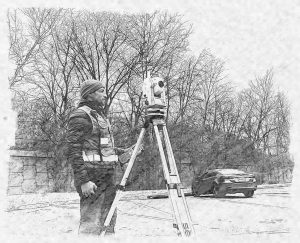
 If you are not a surveyor, what do you do?
  If you/your company had a GKiS character, what would it be?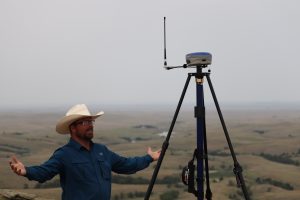
 Where did you study? East Tennessee State University. B.S. of Surveying and Mapping
 Where did you study? I studied in Ireland at Ulster University Jordanstown, Belfast. My degree was a BSc Construction Engineering and Management and I achieved a 2.1. I am always looking into new ways to learn and improve my knowledge base. As they say, every day you learn something new is a good day.